

HELPING CHILDREN NAVIGATE BIG EMOTIONS
Gentle Currents grew from a lifelong effort to understand emotions, relationships, and what helps people feel safe within them.

OUR STORY
As a child, I experienced profound loss and witnessed firsthand the impact that emotional distress can have within a family. Later, as a young adult serving in the military, I was again confronted with the realities of stress and trauma. These experiences eventually led me to explore professional therapy and personal reflection over many years, learning how the mind and body respond to stress and how growth and healing can unfold over time.
Alongside this personal journey, I pursued a degree in Health Science. My studies were driven by a genuine curiosity about how our bodies, minds, and environments influence emotional wellbeing. Over time, both lived experience and education deepened my understanding of how people learn to regulate emotions and find stability within relationships.

But it was becoming a parent that brought everything into focus.
With three young children, emotional life is very present in our home. Big feelings, growing nervous systems, and the everyday realities of family life continually invite patience, reflection, and repair. Like many parents, I found myself navigating moments where a child’s distress could quickly activate my own stress responses. In those moments, the gap between theory and real life becomes very clear.
My own gentle currents do not come from a place of perfection or having all the answers. Emotional regulation has been one of the most significant areas of learning in my life, and that journey continues to shape my commitment to keep growing, learning, and responding more thoughtfully within my own family.
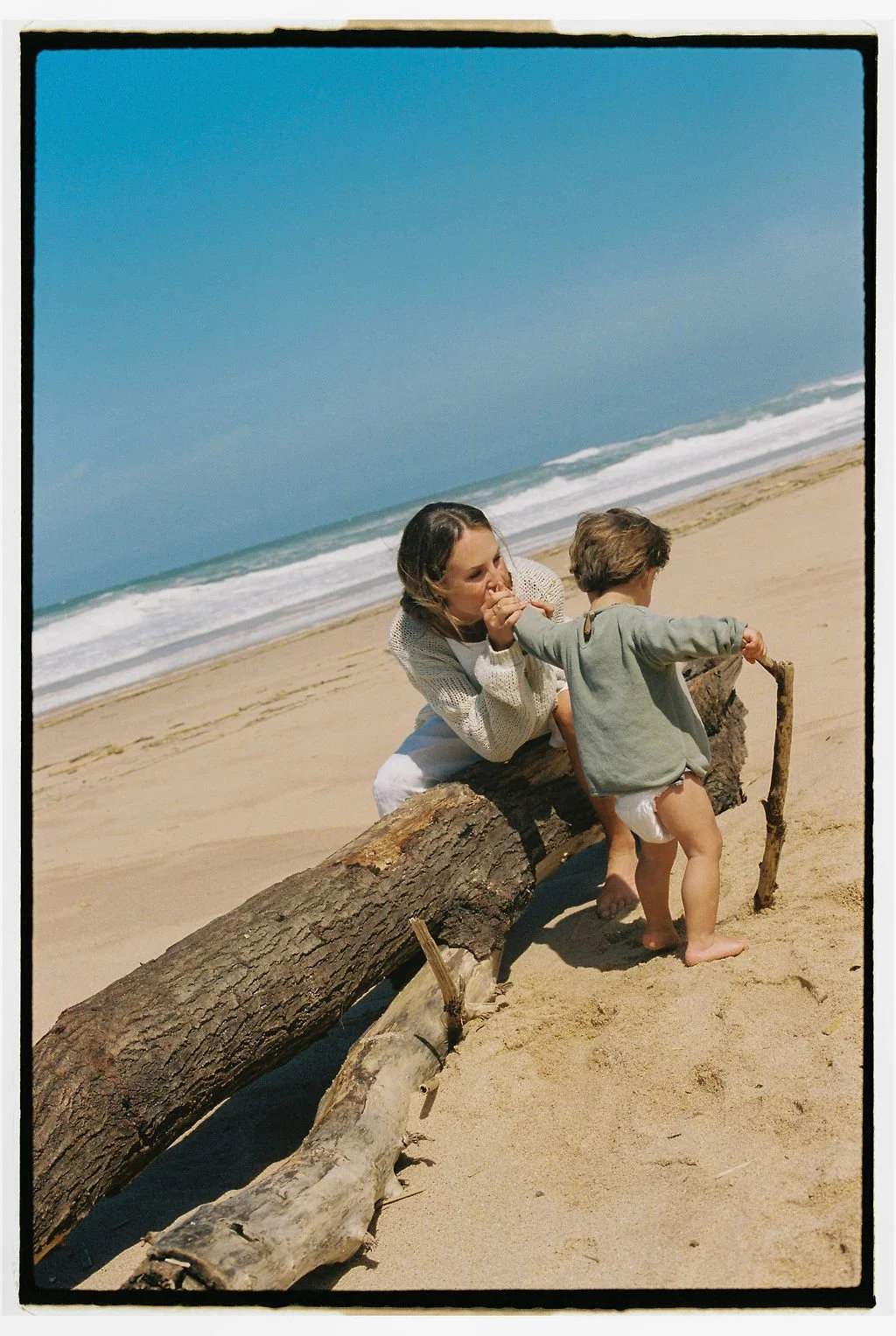
The stories that eventually became the Gentle Currents books began quite simply. I started telling small stories to my eldest son during car rides, often using nature as a way to explore emotions and the ways we move through them. Over time those stories grew, and with them grew the idea that they might help other families as well.
Gentle Currents now brings together lived experience, professional study, storytelling, and the everyday lessons of parenting. At its heart, the work is about helping families understand emotions with greater compassion and remembering that even after difficult moments, we can find our way back to connection.
Through this process, one thing became increasingly clear: many parents are doing their best to support their children through big emotions while also managing their own nervous systems in the middle of everyday life. These moments are rarely neat or ideal, yet they are where some of the most important relational learning happens.
OUR PROCESS
Understanding the Moment
Parents begin by recognising what is happening beneath behaviour. Big emotions in children often reflect an overwhelmed nervous system rather than deliberate misbehaviour.
Steadying Ourselves First
Before guiding a child through their feelings, parents learn simple ways to find a sense of safety and steadiness in their own bodies when emotions run high.
Supporting the Child Through the Emotion
With greater awareness and calm, parents can respond to their child with more patience and understanding, helping them move through the emotional moment rather than shutting it down.
Returning to Connection
Once the moment has passed, families have the opportunity to repair, reconnect, and strengthen the relationship. These small moments of repair are where some of the most important emotional learning happens.

-
The parents who find Gentle Currents are thoughtful, deeply caring people who genuinely want to show up well for their children.
They are often reading, listening to podcasts, and learning about child development and emotional wellbeing. They are trying to understand big feelings and how to respond with patience and connection. Yet in the middle of real life, when everyone is tired, overwhelmed, or pushed beyond their limits - those moments can still feel incredibly difficult to navigate.
They love their children fiercely, but sometimes feel as though they fall short in the moments that matter most: the tantrums, the shouting, the emotional overwhelm, and the guilt that can linger long afterwards.
Many of these parents are also carrying their own histories. Some have experienced childhood trauma, others are managing high-pressure careers or the everyday stress of modern life. Many simply feel the weight of wanting to be the kind of parent they may not have experienced themselves.
They are not looking for perfection. What they are seeking are thoughtful, realistic tools that help them navigate the messier emotional moments of family life for both themselves and their children, while protecting the connection that matters most.
-
Parents today have access to more parenting advice than ever before. There are countless books, courses, and social media resources telling them what they “should” say or do when their child behaves in a certain way.
Gentle Currents takes a different approach.
Rather than offering scripts or behaviour-based strategies, Gentle Currents brings together insights from developmental psychology, attachment theory, polyvagal science, trauma-informed care, somatic awareness, and relational repair. What makes the work different is not that these ideas are new, but that they are integrated and grounded in the lived realities of parenting.
Parenting does not happen in perfect conditions, and emotional moments rarely unfold neatly or predictably. Gentle Currents recognises that the most important relational work happens in the middle of everyday life; when a child is overwhelmed, when a parent feels triggered, and when connection suddenly feels harder to reach.
Instead of striving for perfect responses, the focus shifts toward understanding what is happening beneath behaviour and learning how to return to regulation, softness, and connection again and again.
The way these ideas are shared is also intentional. Gentle Currents draws on nature-based storytelling, science, and biology, alongside the perspective of a trauma-informed parent raising young children. It acknowledges how deeply parental emotional struggles and unresolved trauma can affect family relationships across generations.
At its heart, Gentle Currents exists to support families in responding to emotional moments with greater understanding and compassion, helping parents and children stay connected so those cycles of disconnection do not continue into the next generation.
WHAT PEOPLE ARE SAYING
“As soon as I started reading the words on the pages of these gorgeous books, my eyes welled with emotion at how much they are healing me, as they must be my child. What a gift Keiarna’s words and poetry are to the world. Thank you.”

Amy Ilic, Mother of Two